Business
Iran War: Cooking Gas Price Increase By 40%


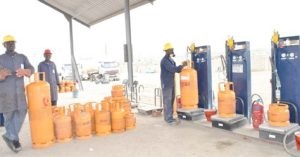
The price of cooking gas has increased by 40% following the ongoing Iran war.
NewsRain Nigeria reports that residents across Nigerian cities are grappling with sharp increases in cooking gas prices, and the impact of the hike in Premium Motor Spirit (PMS) pump prices continues to ripple through household budgets and supply chains.
The surge in cooking gas prices in Nigeria is being linked to the ongoing US–Israel–Iran conflict, which has disrupted global oil and gas markets and pushed up benchmark prices that feed into local LPG costs
READ ALSO: Bayern Munich To Replace Harry Kane With Osimhen
Residents of Lagos communities are grappling with fresh increases in cooking gas prices, as the ripple effects of the recent PMS (petrol) hike continue to impact household budgets.
Findings on Wednesday revealed that one kilogramme of Liquefied Petroleum Gas (LPG) now sells between N1,250 and N1,300, depending on the retailer, from about N900 per litre, last week
The price of a 5kg cylinder ranges from N7, 500 to N8,167, while 12.5kg refills cost between N13,750 and N19,200 along Iwaya and Onike.
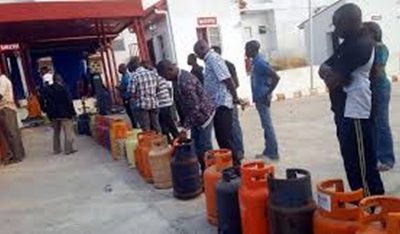
However, the sharp price fluctuations, even over a short period, have left many residents confused and frustrated, with some accusing retailers of exploiting the situation created by the recent petrol price hike.
Retailers attributed the increase to higher transportation costs following the PMS hike and to supply chain pressures.
In Abuja, checks also showed that cooking gas prices spiked up amid the US-Israel/Iran conflict’s oil market volatility.
A 12.5kg cylinder now costs between N17,000 and N19,500 in areas like Garki and Wuse, up 25 per cent from last week, per market surveys. Vendors linked it to imported LPG cost surges—exacerbated by war-driven shipping delays and Brent crude jumps—plus local trucking expenses from the PMS hike.
In the gas-rich Niger Delta, Port Harcourt residents faced the steepest climbs. Refills for 12.5kg cylinders ranged from N18,500 to N21,000 in Diobu and Trans-Amadi, as local production failed to offset global LNG disruptions caused by Iranian threats.
Kano’s markets mirror the crisis, with 6kg cylinders at N9,000 to N10,500 in Sabon Gari and Kwari. Long-haul transport from southern depots, now costlier due to PMS, compounds war-induced increases in feedstock prices.
Market analyses indicate that the US–Israel strikes on Iranian targets and Iran’s retaliatory actions have unsettled crude oil flows in the Persian Gulf, causing international crude and LPG benchmarks to rise.
Because Nigeria’s fuel and LPG pricing is tied to international benchmarks and foreign-exchange costs, local pump and cylinder prices have risen even though the country is not directly in the conflict zone.
Depot owners across Nigeria have reportedly increased the price of cooking gas by an average of about N100 per kilogramme, with major distributors such as NIPCO, Navgas, and Techno Oil quoting roughly N885–N950 per kg, compared with an earlier average of about N800 per kg.
Industry sources say these adjustments followed a spike in Nigeria’s benchmark crude and global LPG rates, which they attribute to the Iran-related supply disruptions and heightened geopolitical risk.
Analysts warn that the same global oil‑price surge that benefits Nigeria’s export revenues can squeeze consumers, because higher benchmarks translate into more expensive petrol and cooking gas, which in turn push up transport and food costs.
They add that if the US–Israel–Iran tensions persist or worsen, particularly around key chokepoints such as the Strait of Hormuz, domestic fuel and gas prices could face further upward pressure.




Dangote Seals US$4.2bn Gas Deal With China’s GCL Group To Power Its Ethiopian Fertilizer Megaproject

Access Bank Calls For Stakeholders’ Collaboration To Boost Intra-African Trade

BOCA Energy Celebrates Women Globally, Extolling Their Priceless Virtues On Mother’s Day

Joan Laporta Re-Elected President Of FC Barcelona

Polaris Bank Chairman, Gidado, Urges Integrity, Professional Excellence At 2026 CIBN Induction

FirstBank’s MREIF: Secure Property Nationwide With N100 Million Loan Access

Onyeali-Ikpe, Dabiri Erewa, Rewane Advocate For Increased Diaspora Participation In Nigeria’s Economy

Zenith Bank Opens Manchester Branch To Strengthen Africa–UK Financial Links

Open Heavens Daily Devotional For Today 16th March 2026
