News
Rite Foods Partners With RecyclePoints On “Waste-Is-Naira” Initiative

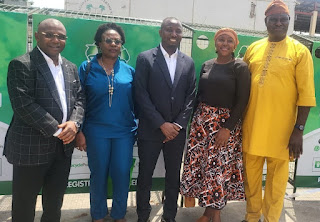
Rite Foods has partnered with RecyclePoints on the “Waste-Is-Naira” initiative.
NewsRain Nigeria reports that Rite Foods Limited has reinforced its commitment to environmental stewardship and regulatory compliance with the launch of its “Waste-Is-Naira” (W.I.N) initiative, in partnership with RecyclePoints.
It is an ambitious, community-driven programme designed to advance Extended Producer Responsibility (EPR) while transforming plastic waste into a viable source of income for Nigerians.
READ ALSO: UEFA Champions League Quarter-finals Fixtures Confirmed
The initiative, unveiled at the company’s corporate headquarters in Opebi, Lagos, marks a significant step in Rite Foods’ long-term sustainability strategy, aligning its operations with national environmental priorities and global best practices in post-consumer waste management.
The partnership with RecyclePoints, a leading waste-to-wealth social enterprise and recycler, is supported by key regulatory and industry stakeholders, including the Lagos State Ministry of the Environment, Lagos Waste Management Authority (LAWMA), Lagos State Environmental Protection Agency (LASEPA), the Food and Beverage Recycling Alliance (FBRA), and community leaders, among others.
The W.I.N initiative operationalises EPR principles by creating a structured system for the recovery, collection, and recycling of post-consumer packaging.
Through this model, Rite Foods is not only taking responsibility for the lifecycle of its packaging materials but also enabling consumers to actively participate in sustainable waste management.
The programme allows residents to exchange used plastic bottles and beverage cans for cash, effectively converting waste into economic opportunities.
With a projected annual recovery of over 750 tonnes of plastic waste, the initiative is poised to significantly reduce environmental pollution, improve circularity in packaging use, and stimulate grassroots economic activity.
Speaking at the launch, Ekuma Eze, Head of Corporate Affairs and Sustainability at Rite Foods Limited, described the initiative as a natural evolution of the company’s sustainability journey and a deliberate move to embed EPR into its business model.
“This initiative goes beyond clean-up efforts. It reflects our responsibility as a producer to close the loop on our packaging materials.
With ‘Waste-Is-Naira’, we are institutionalising a system where post-consumer waste is recovered, reintegrated into the value chain, and translated into tangible socio-economic benefits for Nigerians.”
He further noted that following years of impactful coastal clean-up campaigns under the Riteon thebeach initiative, the company is now scaling its efforts inland through a more structured, incentive-based recycling framework that drives behavioral change at the community level.
Daniel Oderinde, Programme Manager at RecyclePoints, explained that participants are provided with designated ‘Waste-Is-Naira’ sack bags to encourage proper waste segregation at the source.
Once filled, these materials are delivered to designated collection hubs, where they are weighed, logged, and digitally recorded. Payments are subsequently processed, ensuring transparency, traceability, and financial inclusion for participants.
Providing additional insight, Akin Disu, Founder of Popbeachclub and Rite Foods’ partner on the Riteonthebeach project, emphasised the broader societal impact of the initiative, noting that it represents a paradigm shift in how waste is perceived and managed.
“What we call waste is simply value in the wrong place. When producers take responsibility, and systems are designed to connect people to opportunities, we unlock not just environmental benefits, but livelihoods. ‘Waste-Is-Naira’ is a powerful example of how EPR can work effectively at the grassroots.”
Regulatory stakeholders also commended the initiative for aligning with environmental standards and strengthening public-private collaboration.
Mrs. Adedayo Adebayo, Director of Environmental Sustainability at LASEPA, highlighted the importance of compliance and structured frameworks in delivering long-term impact, while Mrs. Oguntola Omolara of LAWMA described the programme as a timely intervention that supports the state’s waste management objectives.
On his part, Adeoye Babajide, Director, Waste Management, Lagos State Ministry of Works and Water Resources, stated that the laudable initiative aligns with the state government’s drive in keeping the environment healthy and habitable, and also in preserving the natural water resources for human use.
Lending her voice to the initiative, Arese Onigise, Executive Secretary of FBRA, stated: “Initiatives like ‘Waste-Is-Naira’ exemplify how producers can move beyond compliance to actively implement Extended Producer Responsibility in a way that is both practical and impactful.
By creating collection systems that incentivise consumers and integrate informal waste actors, Rite Foods is contributing significantly to the development of a circular economy for packaging in Nigeria. This is the kind of scalable model the industry needs to drive long-term environmental sustainability.”
She further called for continued collaboration among key stakeholders to ensure the long-term success and scalability of such initiatives.
From an operational standpoint, the initiative is designed as an inclusive, community-based system that integrates households, waste pickers, and aggregators into a formal recycling value chain.
Beyond environmental impact, the W.I.N initiative is expected to create jobs across the recycling value chain, empower informal waste collectors, and strengthen Nigeria’s circular economy.
By embedding Extended Producer Responsibility into a scalable, community-focused model, Rite Foods is demonstrating how corporate leadership, when aligned with regulatory frameworks and local realities, can drive measurable environmental and socio-economic impact.









NAPE President Commends BOCA Energy For Sponsorship, Highlights Relevance Of Deep-Water Survey Theme

Fidelity Bank Powers Women’s Growth With “Give Her Power” Skills And Support Series

Rite Foods Partners With RecyclePoints On “Waste-Is-Naira” Initiative

UEFA Champions League Quarter-finals Fixtures Confirmed

Black Market Dollar To Naira Exchange Rate Today 19th March 2026

Nigerian Newspaper Headlines, Naija News for Thursday 19th March 2026

Open Heavens Daily Devotional For Today 19th March 2026

ICYMI: Soludo Sacks Political Appointees 24 hours after swearing-In

Eid-El-Fitr: Sultan Of Sokoto Declares Fasting Continues
