Metro
Check Out Few Things To Know About Late Iranian Supreme Leader, Ayatollah Ali Khamenei

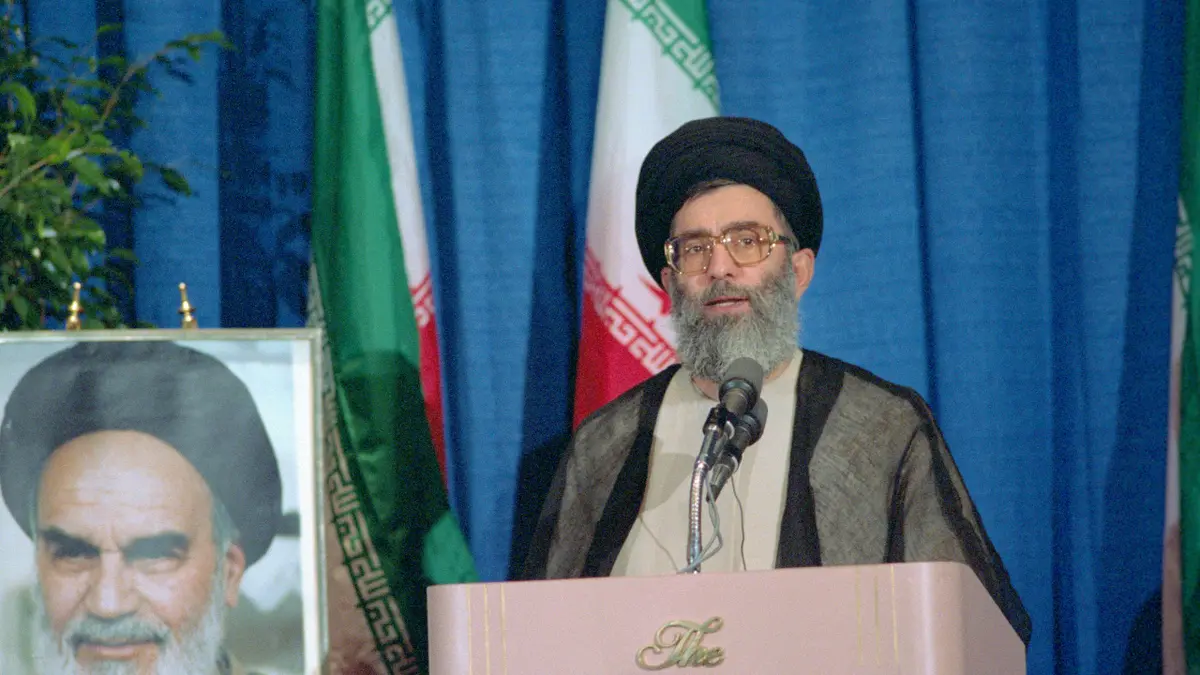
A few things to know about the late Iranian Supreme Leader, Ayatollah Ali Khamenei, have emerged.
NewsRain Nigeria reports that Ayatollah Ali Khamenei, Iran’s Supreme Leader, has been confirmed dead following Israeli and US strikes, marking the end of a 36-year rule that reshaped Iran’s political system and its posture towards the West.
His death closes a defining chapter in the history of the Islamic Republic, a state he did not found, but one he came to dominate more completely than any leader since the 1979 revolution.
READ ALSO: See Happy New Month Messages, Wishes, Prayers For March 2026
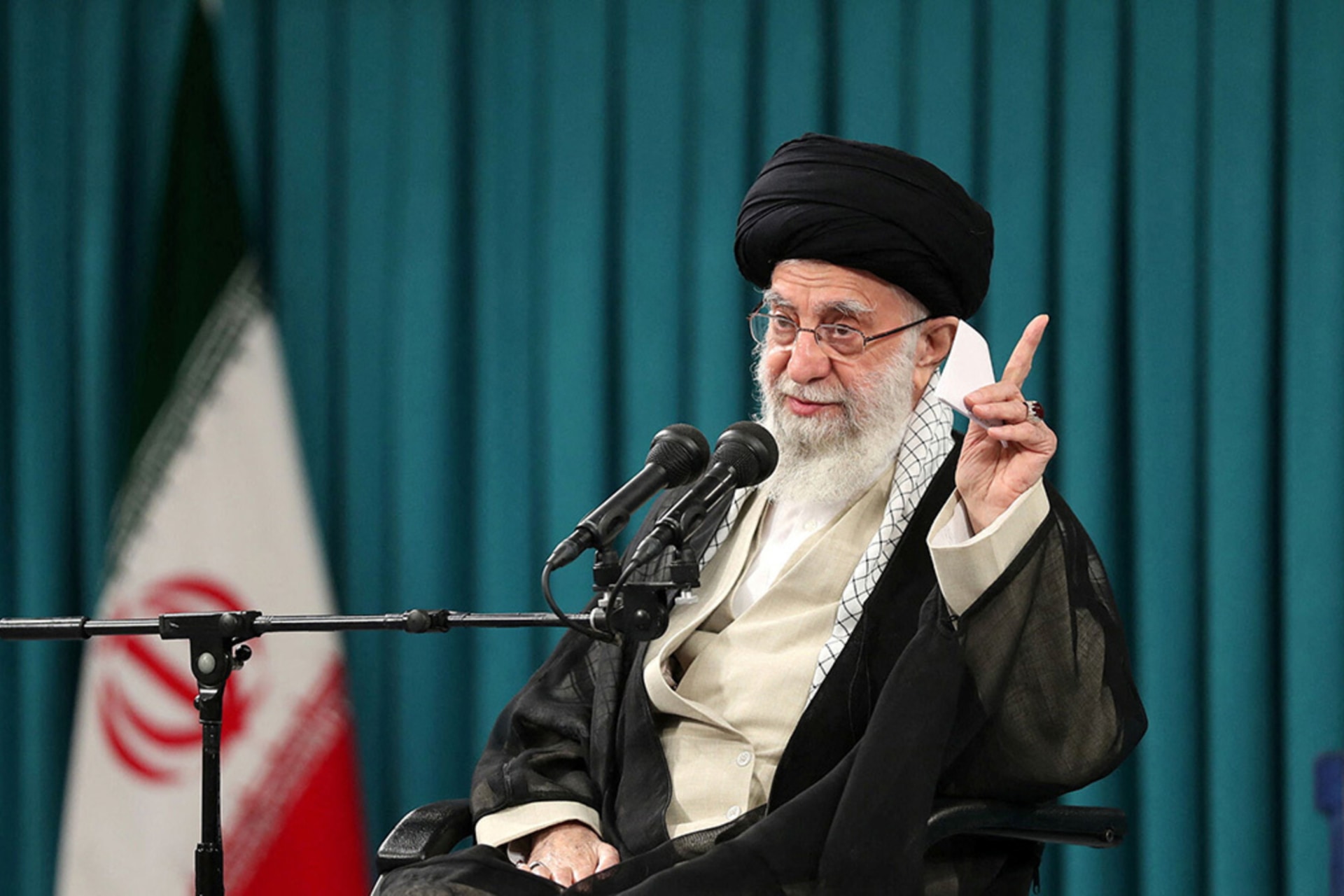
Meanwhile, Iran’s interim leadership council has appointed Ayatollah Alireza Arafi as the clerical member of the body now exercising the powers of the late Supreme Leader, Ayatollah Ali Khamenei.
Arafi officially assumed the role on March 1, 2026, in accordance with Article 111 of the Iranian Constitution, which provides for a temporary leadership structure pending the Assembly of Experts’ selection of a new Supreme Leader.
Article 111 stipulates that in the event of the death or incapacitation of a Supreme Leader, a temporary leadership council assumes the responsibilities of the office until a permanent successor is chosen.
With Khamenei’s death, the interim council has now begun overseeing the functions traditionally exercised by Iran’s highest political and religious authority.

Arafi’s appointment places him at the centre of this sensitive transition, as the country navigates a period of political uncertainty.
As a senior Shi’a cleric, Arafi is widely regarded as a figure with influence across Iran’s major institutions, including the military establishment, the judiciary, and the religious seminaries.
Until the Assembly of Experts concludes its deliberations and selects a permanent Supreme Leader, Arafi and other members of the interim council will collectively exercise the constitutional powers attached to the office.
Below are a few things about late Iranian Supreme Leader, Ayatollah Ali Khamenei :
- He inherited, not built, the Islamic Republic: Khamenei did not found the Islamic Republic. That role belongs to Ruhollah Khomeini, who led the 1979 revolution that toppled Shah Mohammad Reza Pahlavi.
The post of Supreme Leader was enshrined in the new constitution, granting a senior cleric ultimate authority over elected institutions. Khamenei stepped into that structure after Khomeini died in 1989 and gradually consolidated its powers. - He was once president and survived an assassination attempt: Before becoming Supreme Leader, Khamenei served as Iran’s president from 1981 to 1989. He was elected with 97 percent of the vote in a tightly controlled election during the turbulent Iran-Iraq War.
That same year, he narrowly survived an assassination attempt when a bomb hidden inside a tape recorder exploded beside him. The attack, attributed to the Mujahedin-e Khalq, left his right arm partially paralysed. - He has ruled longer than any Middle Eastern leader today: Since assuming leadership in 1989, Khamenei’s 36-year tenure makes him the longest-serving head of state in the Middle East and Iran’s longest-serving leader since the Shah.
At 86, his political longevity has shaped every major domestic and foreign policy decision in modern Iran. - His authority stretches across all branches of power: As Supreme Leader, Khamenei commands the armed forces, appoints the chief of the judiciary and heads of the state media, and exerts decisive influence over foreign policy and national security.
Although Iran holds presidential and parliamentary elections, candidates are vetted by the Guardian Council, whose members are directly or indirectly appointed by him. In practice, this gives him direct or indirect control over the executive, legislative, and judicial branches. - His power rests heavily on the IRGC and Basij: Central to his authority is the loyalty of the Islamic Revolutionary Guard Corps (IRGC) and the Basij paramilitary force.
These institutions, numbering hundreds of thousands, are not only military actors but also economic and political players, forming the backbone of regime stability during internal unrest. -
He oversaw both confrontation and diplomacy with the West: Khamenei has long described the United States as Iran’s “number one enemy”, with Israel close behind.
Yet he endorsed the 2015 nuclear agreement negotiated under President Hassan Rouhani. The deal briefly eased sanctions before US President Donald Trump withdrew from it in 2018, reimposing economic pressure and reigniting tensions. -
The nuclear issue defined much of his rule: Iran’s nuclear programme has been a defining feature of Khamenei’s leadership.
Under heavy sanctions, he promoted what he called a “resistance economy” aimed at reducing reliance on Western markets and strengthening domestic production. Still, inflation, unemployment, and economic hardship have fuelled waves of protests, notably in 2009, 2019, and 2022. - He faced repeated domestic unrest: Khamenei’s rule has not been uncontested. Mass protests erupted after the disputed 2009 presidential election, followed by economic demonstrations in 2019 and widespread rights-based protests in 2022. Each wave tested the regime’s resilience and reinforced the role of security forces in maintaining order.
- His family life remains largely private: Despite his immense political visibility, little is publicly known about his personal life. He is married and has six children. Some extended relatives reportedly live abroad, including in Paris, while his immediate family remains in Iran. The identities of most grandchildren are not widely disclosed.
- He is a poet who gardens: Often portrayed as austere and stern, Khamenei has a quieter side.
He reportedly enjoys poetry and gardening and has been photographed tending plants with a simple plastic watering can. In his younger years, he was known to smoke a pipe, an unusual habit for a cleric.
Despite wielding vast constitutional authority, he is said to live modestly and rarely travels outside Iran.



First Ever World Kolokun (Goat Chasing Competition) Debuts In Ondo State

What You Should Know About Metastatic Kidney Cancer That Caused The Death Of Alex Ekubo

Nigerian Newspaper Headlines, Naija News for Thursday 14th May 2026

Open Heavens Daily Devotional For Today 14th May 2026

Black Market Dollar To Naira Exchange Rate Today 14th May 2026

ICYMI: Lagos State Govt To Introduce State Driver’s Licence

Update: Alex Ekubo’s Family Breaks Silence On Actor’s Death, Says ‘He Died Of Stage 4 Kidney Cancer’

Nigeria To Host CAF Awards For First Time Since 2017

Fidelity Bank Grows Gross Earnings By 45.6% for FY 2025
